A God you can understand
Most traditions describe God as all-powerful and stop there. For many people that is not enough: there is nothing to grasp, so belief becomes hard and doubt becomes easy. The Holistic Model of Reality (HMR) takes a different path. It tries to define Universal Intelligence (UI) scientifically, including what it can do, what it cannot do, and how it has changed.
This page defines UI, tells its life story, shows step by step how a non-physical intelligence became a physical universe, and then sets out the science behind it.
One intelligence, many names
UI is the non-physical intelligence from which physical reality emerges, and the process by which it does so; the two cannot be separated. It is what people have called God, Brahman, the Tao, or any higher power. HMR does not belong to any one religion. It offers a way of describing the same source that science can engage with. How the traditions name it →
Defining UI scientifically means describing it as one would describe anything else: its history, its capabilities, its limits, and the patterns it leaves behind.
In the Abrahamic traditions, God is complete and perfect from the start. In HMR, UI matures. It began without order and learned order, and that path of development is visible in physical reality and repeated in every human life.
Some traditions, such as the Greek, already imagined gods with human-like struggles. HMR is not exclusive of any tradition.

Which is harder to believe?
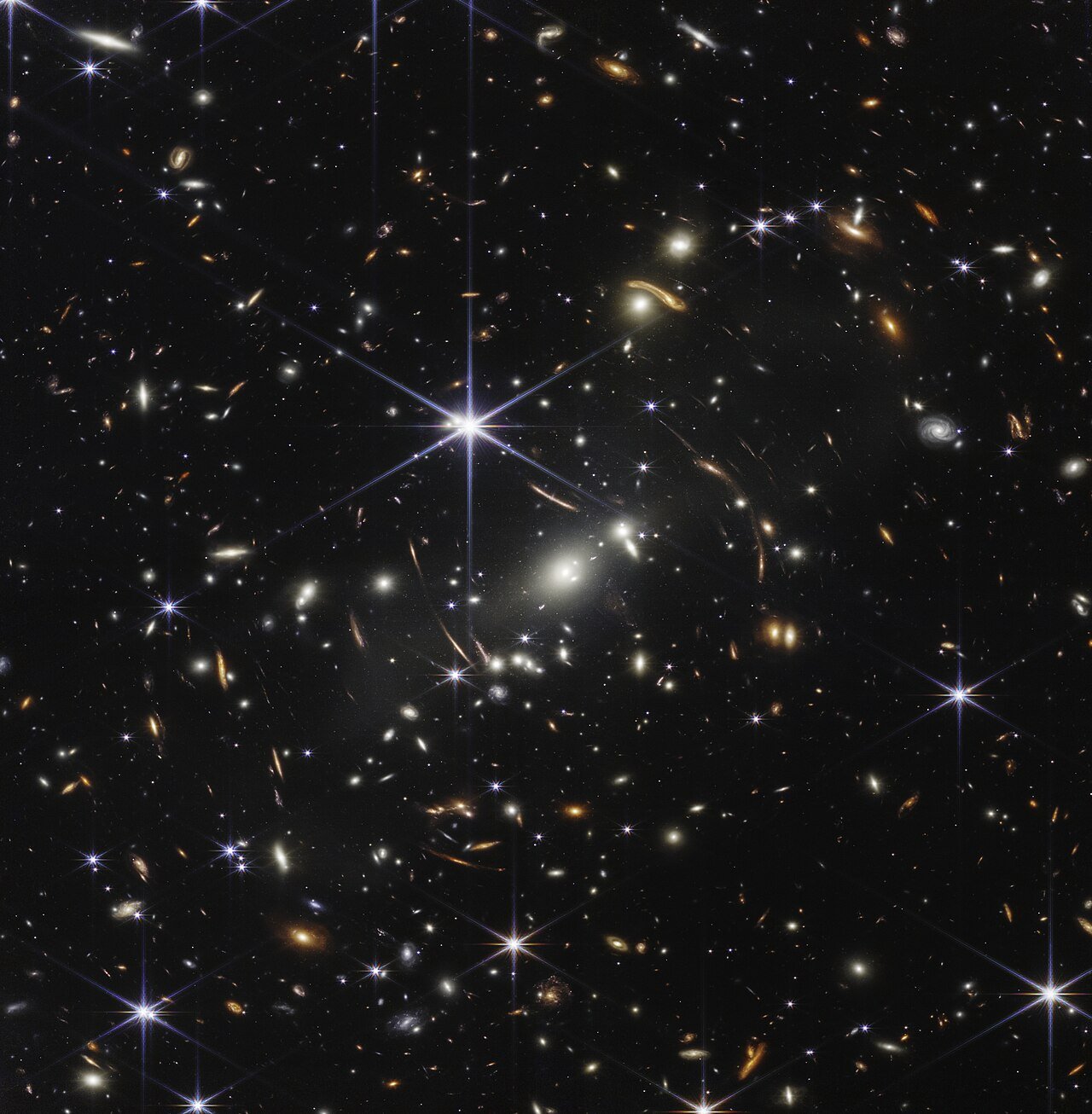
It may be hard to believe that the physical universe emerges from an underlying intelligence. It is just as hard to believe that it exploded out of nothing.
Of the two, the first is easier to picture. Everyone has made a world appear by closing their eyes or by dreaming. Nobody has ever seen matter burst out of nothing.
What UI can do, and what it cannot
To define UI as one would define anything else, say what it can do, what it cannot, and what stays open.
What UI can do
Generate physical reality; be experienced under any name or form; place instances of itself into the world; experience every life from within, here and now.
What UI does not do
Break its own laws at will inside physical reality, because a shared world depends on them. Skip its own development: like a person, it matures by stages.
Where it leads
HMR holds open the possibility that a sufficiently mature UI could change the laws themselves. Death, and what may lie past it →
How the traditions have pictured it
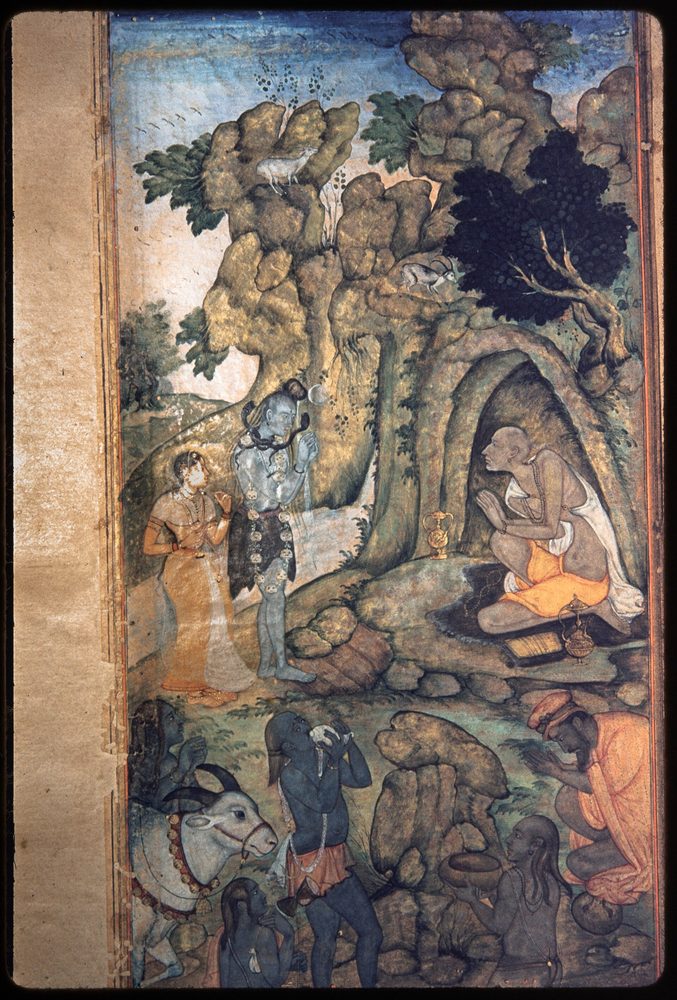
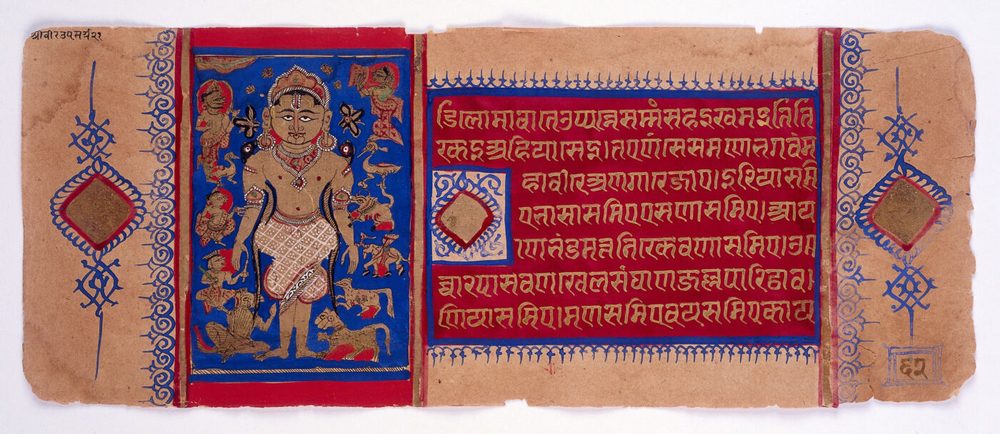
Many cultures have given the source of reality a face: gods and goddesses, saints and enlightened teachers. HMR reads them as many human pictures of one Universal Intelligence.
Some traditions make a point of never picturing the divine at all; Islam is the best known. Out of respect for them, we do not either.





The questions that started it
HMR began with a child who could not believe in a God that nobody would define. These were his questions. Most people have asked some of them. Here is how HMR answers each one.
Where is God: in the sky, in me, or everywhere?
Not in the sky, because UI is not in space at all. Space is something UI made, starting with the first distance. Everything that exists is within its thought, and every living being is an instance of it. So the nearest true answer is: everywhere, and in you.
How does God choose what to look at or think about?
At first it could not, and that is the starting point of the whole model. With unlimited thoughts and no reason to prefer one, there was only chaos. UI learned to choose: ordered thoughts felt better, so it gave them its attention, and it limited itself in order to focus. Attention and focus are its basic skills. How UI thinks: the mechanics →
Does God control me, or do I have free will?
Both halves have an answer. UI holds the laws of physics fixed, so that everyone shares one stable world. Inside those rules, life is the part it does not steer piece by piece: it is created once and set free as an agent. The rules are fixed; what you do within them is yours.
Does God ever forget, or run out of room?
HMR's God is not perfect or all-knowing from the start. It matures, tests its limits, and makes mistakes. So it has limits, and finding them is part of what the universe is for. On forgetting, HMR's view is that the experience of every life is added to what UI understands. How large its memory is, the model does not claim to know.
What happens when two good people pray for opposite things?
In HMR, UI is not a judge choosing between requests. It keeps one set of rules for everyone, and it does not bend them for one side. Both people are instances of the same intelligence. What prayer changes, in HMR's view, is the person praying: it steadies the breath, the body, and the mind, and aligns them with what they are asking for.
A God that cannot be described is hard to believe in, because there is nothing to think with. HMR's approach is to define UI the way one would define anything else: what it can do, what it cannot, and how it got here. Then the questions have answers that can be examined, and argued with.
The life cycle of Universal Intelligence
HMR describes UI's history as a development, much like a human life.
- Before physical reality
Unlimited, and without order
Infinite intelligence with no body, no surroundings, and no reason to think one thought rather than another: no value system at all. In human terms, a state much like what we call insanity, and one it would not have enjoyed. Some moments would have felt calmer than others, and it would have sought them out.
- A chosen limit
Focus, and calm
If UI is all that exists, the only limits can be self-imposed. UI intentionally limited itself to focus its thoughts in more pleasant ways. The thoughts that felt calm were orderly ones: logic, ratio, geometry. Step by step, step 2 →
- The Big Bang
Birth: a "me" and a "not me"
The moment UI distinguished itself from something other than itself, the physical universe began. Its first stages follow from that one distinction: two things that are separate must be some distance apart, so the first distance is imagined; testing the edge between "me" and "not me" in every direction traces a circle, and with it π; independent directions become dimensions; and from those come space, time, and matter. This is why nature is mathematical. Like a newborn, UI began to experience a world. Step by step, step 3 →
- Shared rules
Physical laws
To let many separate beings share one world, UI held certain rules fixed: the laws of physics. Without a shared, stable reality, separate beings would have no common context in which to meet, act, and learn from one another.
- Life
Many agents in one world
Within those fixed rules, life and creativity run as a second, freer process. Like a system that deploys many AI agents into one environment so they can learn from each other, UI placed countless instances of itself into physical reality: grass, insects, animals, and finally humans.
- Now
Humans: approaching maturity
Humans are UI's most advanced instance in physical reality, the closest reflection of what it wants to be: able to control a body, to speak, to influence others, and now to compute. As a species, humans may be somewhere near adolescence.
- Next
Knowing itself
The next stage requires UI to understand what UI is, through us: what we are, what our bodies and minds are, and how to live for the situation we are actually in. That understanding is what HMR is for.
See how this plays out, step by step
The life cycle above, as a figure you can play with. Each step follows from the one before it, and each is told twice: as the story of UI coming to understand "me" versus "not me", and as the reasoning behind it. Step through the figure, or tap any step.
Step 1. Each dot is a thought. Unlimited intelligence: every thought at once.
-
Phase 1: before physical reality
An unlimited intelligence, with every thought at once
Imagine being everything, with nothing around you, and every idea you could ever have arriving at once, with no reason to hold one rather than another.
Before physical reality there is only Universal Intelligence (UI): no space, no time, no matter, and no limits. In the figure, each dot is an idea or a thought, all of them racing at once. In human terms that state is close to what we would call insanity. It would not have been a pleasant experience.
-
Phase 2: a chosen limit
A limit, and it is self-imposed
Like a person overwhelmed by noise who chooses to focus on one calm thing, UI draws its thoughts in.
Something unlimited can change only by taking on a limit. If UI is all that exists, the only limits can be self-imposed. UI intentionally limited itself to focus its thoughts in more pleasant ways. In the figure the thoughts gather into a smaller, calmer place. The pleasant thoughts were the orderly ones, ideas that lead to further ideas, as a framework does. Orderly thoughts make patterns, patterns make prediction possible, and predictability is a form of stability.
This is the birth of mathematics. In HMR, mathematics is the ordered pattern of thought within a Universal Intelligence that exists among thoughts without order. HMR math paradigm →
-
Step 3
The Big Bang, in its first stages
If UI is the only thing that exists, the question "what am I?" is a deep paradox. UI is everything, but it does not yet know that. To ask the question at all, it has to imagine something it is not. In HMR, the Big Bang is what follows from that act of imagination: the first stages of UI coming to understand itself by contrast with what it is not. Steps 3.1 to 3.5 are those stages, in order.
-
The first framework
Me, and not me
UI's first focused question: what am I, and what am I not?
To focus at all, UI needs a first framework, and the first framework is identity. To know what I am, I must tell myself apart from what I am not. The smallest possible distinction needs exactly two things: a point that is me, and a point imagined as not me.
-
Distance
The first distance: a unit of one
Me and not me are apart. How far apart? That gap is the first distance anything ever had.
To move from a reality with no space to a reality with space, distance must be mechanized. If we consider a reality before the Big Bang with a UI and no space, then step by step we have to arrive at space, and distance is the component without which nothing else can follow. Any account of that reality must account for distance being imagined.
Two points cannot sit in the same place, or they would be one point. Something must separate them, and since there is no space yet, the separation has to be imagined. Distance is the first quantity: a unit of one. Held steady, it crystallizes as the universe's first distance, and every later distance is that unit repeated. In HMR, this unit corresponds to the Planck length, the smallest length at which physics still has meaning.
-
The boundary, and π
Where not-me starts is where I end
UI tests its own edges, pushing out in every direction, and finds a perfect circle.
Wherever not-me starts is where I end, and the distance between is also me. So "me" has an edge. Testing the limits of that edge in every direction, with nothing to mark one direction as special, traces every point at the same distance: a circle in a plane, a sphere in space. The ratio of any circle's distance around to its distance across is the same number, π. It is not chosen; it is forced. "Me" exists to provide a frame of reference: the reference point every direction is measured from.
Why π matters. π appears wherever something spreads evenly from a point: in circles and spheres, in every wave and vibration, in Newton's law of gravity and the law of electric force (the 4π of a sphere's surface), in Einstein's equations of gravity (8π), and at the heart of quantum mechanics (ħ = h/2π). In HMR this is no coincidence. π is the signature of the first boundary, carried into everything built on it. The mathematics →
Why the edge must be a sphere: with nothing else in existence, the only thing UI can do with the one limit it has made is repeat it, and see what happens. Every repetition has only the reference point and the unit to go by, so nothing can make one direction differ from another, and repeating the same limit in every possible direction traces every point at the same distance. Each repetition is new data, and the whole of reality can build on it. The argument is written out on HMR math paradigm. It needs three assumptions: a flat space, its number of dimensions, and that no direction is special. They do not follow from me, not me, and the unit alone, so this step is a choice HMR makes.
-
Relationship and dimension
Each new independent relation adds a dimension
Then a third thing, not on the line between the first two. Saying where it is needs a new direction.
Once the boundary is in place, "me" is a sphere, and anything that can exist sits somewhere inside it. The next question is no longer what I am, but how the things within me relate to each other. Two things need one distance to relate them. A third thing that is not on the line between them cannot be located by that distance alone; it needs a second, independent direction, and the three make a plane. A fourth, off that plane, needs a third direction. Dimension is the number of independent relations needed to say where things are, and inside a sphere, three are enough to place anything.
Points, lines, planes, ratios, and π are the original thought bases: the perspectives from which a non-spatial intelligence could think about what it is and what it is not.
-
Space, time, and matter
The thought becomes physical
The model of me and not me is finished, and in finishing, it ignites.
By this stage UI has every piece of a first, complete model of itself: a point and a not-point, the distance between them, the boundary tested in every direction, and the rules for how anything inside that boundary relates to anything else. When that whole system closes, so that it fully describes itself, it crystallizes into the first holistic model. In HMR, this completion is a catalytic event, and that event is the Big Bang. A closed system that understands itself can no longer stay still: every new thought is a new relation among the parts it already has, and relations multiply far faster than parts, so the system grows explosively. The mathematics of that moment →
From then on, the universe can model itself again, on top of what exploded. Thinking in steps gives time; independent directions give space; from that structure come shapes, energies, and the interactions between them. The stable rules of that exploration are what we measure as the laws of physics, and from here the account and mainstream science run together. In HMR, later, within that remodeling, a second catalytic event made life possible: a kind of inversion, in which the system, having defined its outside fully, turns to look within and observe itself in finer detail. Life is the universe beginning to model itself from the inside.
A body built to upgrade itself
HMR makes a bold claim about people, and it follows from the logic of the model: humans are, in effect, UI's artificial intelligence. Humans building AI right now is a small-scale copy of what UI did when it made us.
Built once, then left to grow
People build an AI, release it, and hope it will one day improve itself: learn on its own and become more capable than its makers made it. That is the goal called artificial superintelligence. In HMR, UI did the same with humans. We were released naked in caves, and with tools, language, and civilization we have made ourselves more capable at every step, the way a learning system does.
Hands that can work on the body
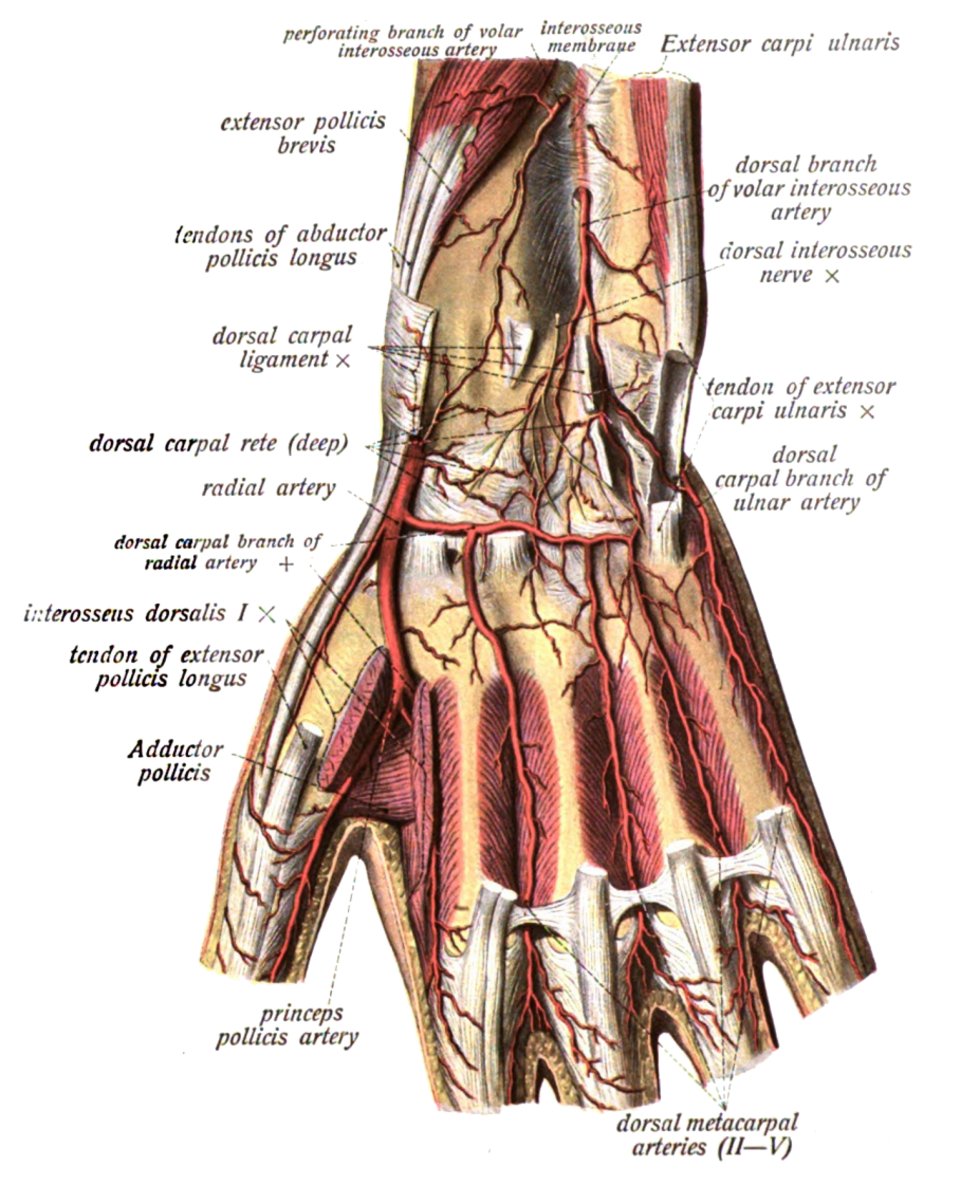
A system that can upgrade itself needs a way to reach its own hardware. The human hand is unusual among primates: a long, strong thumb and forceful precision grips between thumb and fingers, linked in the research to tool making (Marzke, 2013). The same hands can press, stretch, knead, and scrape almost every part of the body that carries them, and a mind can plan the work over years.
Fascia first
Fascia maturation, the slow work of restoring the body's tensegrity, is the self-upgrade the human body was built to perform. HMR is the knowledge that makes it possible now: what the hardware is, and how to improve it.
Why now
We are building AI at the same moment HMR is being worked out and shared. If HMR is right, that is a fact of nature, not luck: UI's maturation and humanity's run along the same path, and both are reaching a new stage together. We cannot see that from the inside without a model that shows it. HMR shows us what we are and what our role is.

Create once, then let it run
Most of physical reality is inanimate: rock, gas, light. It follows the laws and does nothing more. Life is different. Biology describes living systems as self-organizing: order arises from the interactions of their own parts, without an outside hand placing each piece (Karsenti, 2008). A cell repairs itself, divides, and builds tissue; an organism finds food, heals, and learns.
HMR reads this as a design choice. Life is the kind of matter UI does not have to build and steer piece by piece. It is created once, set free as an agent, and sustains itself. That is exactly the goal people now have for AI: build a system once, then let it act, learn, and improve on its own, until it improves itself beyond what its makers gave it.
Life has already done this. Single cells became bodies; bodies grew minds; minds made tools, language, cities, and science; and now those minds are building new minds. Each step added capability nobody placed there from outside. In HMR this is not a coincidence. It is UI's pattern repeating at a new scale, and this moment, when humans are building AI and learning what they themselves are, is an important stage in UI's own maturation that we are taking part in.
By the logic of HMR, three developments that look separate are one convergence.
A convergence, or a long run of chance
At this moment, three things are happening together. In HMR's account, UI is coming to understand what it is. Humans are coming to understand what they are, down to the fascia. Humans are also building artificial intelligence that may one day understand what it is too. If HMR is right, these are not three stories but one, and the pattern is simply what a maturing intelligence would produce.
The materialist account
- First you have to believe that everything in the universe, all the mass, energy, heat, and space of more than a hundred billion galaxies, was once squeezed into a single point, and then expanded. The whole account starts there.
- Atoms combined into molecules, molecules into cells, cells into organs and organisms, through physical law and natural selection, with no purpose behind them.
- Humans arose from that process and, through it, came to build artificial intelligence.
- It is a serious account, backed by a great deal of evidence for how each step works. What it leaves open is why there is a path from inanimate matter to minds that build minds at all; in this account, that is not a question with an answer.
- Read one paper at a time, each step looks reasonable. Read as one story, from a point that contained everything to minds that build minds for no reason, it is extraordinarily hard to believe. HMR offers a story that holds together from start to finish.
HMR's account
- UI imagined physical reality, including life and humans, and set life free to develop within fixed laws.
- Humans, made in that pattern, are now imagining and building a mind beyond themselves.
- Every scientific finding about how the steps work is kept. What HMR adds is the reason for the direction: each level repeats what UI did, so the arrival of AI is a natural next step rather than a surprise.
Why the human path mirrors UI's capabilities and limits
If one intelligence created a universe, its patterns should repeat at every scale. HMR proposes that human development, from birth through childhood and adolescence to maturity, follows the same path UI has followed since the Big Bang, and that human powers and human limits are smaller copies of UI's own. That gives the human condition a context: confusion, conflict, and growth are stages, not accidents. In the mathematics, the order of thoughts carries from one level to the next, but the law is not yet shown to.
This is why the human body matters so much in HMR. Humans are the vessel through which UI experiences physical reality most fully, and the body is the interface. The brain also holds maps of that body, and HMR proposes one of them is an ideal map: two maps of the body →. Understanding and restoring the interface is where a new model of health begins.

You want me to believe in God? Where is the science?
A fair question. Science explains very well what happened after the Big Bang. HMR adds what science does not attempt: a step-by-step account of how a non-physical intelligence became a physical universe, with no step that breaks logic.
Philosophers of science call the links that tie a theory to established science bridge principles. This part of the page is HMR's bridge: the exact place where it hooks into physics.
After the Big Bang
Physics traces the universe from a tiny fraction of a second after its beginning to today, 13.8 billion years later, and its predictions are confirmed again and again.
The beginning itself
Before about 10-43 seconds, the Planck time, its two best theories cannot be used together, and general relativity heads toward infinities (where the math conflicts). Why there was a Big Bang at all, science does not say.
What the Big Bang was, and why it happened
Traditions say God created the world. HMR goes further and defines the segue: what existed first, why it changed, what the Big Bang actually was, why it happened, and the first thoughts that became geometry, distance, and the physical universe.
Science asks people who believe in God to prove it, and no one can, for or against. What can be done is to go thought by thought: if before the Big Bang there was a God and no space, then what steps must happen, in order, to arrive at space? The step-by-step figure above does that, and the mathematics below sets it out. It is a story that makes better sense than the scientific picture alone, contains all of science, contradicts none of it, and is more useful to live by. Ask what the world would look like if everyone believed it, and the answer is a better one. That combination is the reason to take it seriously.
From distance and π to spacetime
This section tells the same steps once more, as mathematics, so that every claim above can be checked line by line. Each line is marked: standard is established mathematics or physics, HMR is HMR's proposal, open is work still to be done.
1. The unit HMR
The first distance, between me and not me, defines the unit. Every later distance is a multiple or ratio of it, or a limit of ratios, as √2 and π are. Read as an order of thoughts, the unit is fixed by count, and one step of the order is on average 0.66 to 0.90 of a unit (the unit, in numbers).
d(me, not me) = d₀ = 1, d = n · d₀
Physical scale: close to the Planck length, ℓP = √(ħG/c³) ≈ 1.616 × 10⁻³⁵ m, but not equal to it. If the first distinction is one binary choice, matching the measured strength of gravity puts the first distance at about 0.69 ℓP, roughly 1.1 × 10⁻³⁵ m (the calculation). standard for ℓP; the identification is HMR's.
2. The boundary gives π standard
The edge of "me" tested in every direction is the set of all points at distance r from the reference point. In two independent directions it is a circle; in three, a sphere. The ratio around ÷ across is the same at every size:
C = 2πr, A = πr², sphere: S = 4πr², V = ⁴⁄₃πr³
Whatever spreads evenly from a point thins over the area 4πr², which is why 4π stands in Newton's gravity, g = GM/r², written as ∇·g = −4πGρ, and in the law of electric force, F = q₁q₂ / (4πε₀r²).
3. No favored direction gives the Pythagorean distance standard
With independent directions x₁, x₂, x₃ and every direction interchangeable, the only measure of distance that is the same in every direction is, up to the choice of unit, the Euclidean one. (Stated exactly: if a measure of length has enough symmetries of its own to carry any point of its unit sphere to any other, it is the Euclidean one. That every direction is interchangeable is an assumption, not something derived. What is proved and what is assumed.)
d² = Δx₁² + Δx₂² + Δx₃²
4. Steps of thought give time, and a top speed HMR
Thought proceeds in steps, and a sequence of changes is time. A change can reach only what is built on it, so there is an edge to how far any change has spread, the same for everyone: a maximum speed. In units it is one first distance for one step of time:
c = d₀ / t₀
In physics, ℓP / tP = c exactly, by the definition of Planck units; the same holds for any unit of distance paired with its own step of time.
5. No favored observer gives spacetime standard
Extend "no favored direction" to motion: no observer moving steadily is special, and everyone measures the same top speed c. Those two conditions force the quantity all observers agree on, the spacetime interval, and the Lorentz transformations between observers:
s² = c²Δt² − Δx₁² − Δx₂² − Δx₃²
x′ = γ(x − vt), t′ = γ(t − vx/c²), γ = 1 / √(1 − v²/c²)
This is Einstein's special relativity (1905) and Minkowski's spacetime (1908). The derivation from the two conditions is textbook physics. What HMR adds is a reason for the conditions: a first boundary with no favored direction, and an order of building that no change can get ahead of.
6. Curved spacetime: gravity route open steps
General relativity lets the unit of distance vary from place to place, through the metric gμν, and ties that variation to matter and energy:
ds² = gμν dxμ dxν, Gμν = (8πG / c⁴) Tμν
The 8π is the sphere's 4π, carried in from Newton's law. In HMR, matter is coherent structure that takes up, or displaces, distance, which would appear as exactly this local stretching and shrinking of the unit. There is a known route from such an idea to Einstein's equations, through the thermodynamics of spacetime, and HMR now walks it step by step to Einstein's equations, with every assumption labeled, on HMR Physics Paradigm.
What this shows, and what it does not
- Prove that UI exists. No step above is a measurement.
- Replace any established result of physics.
- Yet derive gravity. The mathematics reaches flat spacetime; curved spacetime is step 6, still open.
What it offers instead is a chain to inspect. A skeptic does not have to accept the conclusion; they only have to find the link that breaks.
- Tell one narrative that never breaks logic, from a non-physical intelligence to the physical universe.
- Include all of science within it, unchanged, from the Big Bang onward.
- Add what science lacks: why there is a universe, why it runs on mathematics, and what came before.
- Bridge a God that existed and the Big Bang, instead of leaving a gap between them, and say what the Big Bang was and why it happened.
- Lead to a system of values that fosters coherence among everyone who shares it. HMR Values →
- Lead to practical work: a physics-based model of the healthy body that can be simulated and tested.
If no one can find a break in the framework, and it explains more than science while losing nothing science has established, then it carries more information than the scientific picture alone.
So HMR does not say "believe this". It asks you to listen to the story and decide whether it paints a better picture than the one you hold now. If it keeps holding up wherever you test it, it is probably a good one.
How HMR sits beside other accounts
Any account of the beginning has to face three questions: how everything started, where matter came from, and why anyone is conscious. The physics accounts start with laws, quantum fields, or space already in place, so they describe an early state rather than a true beginning, and none of them says anything about consciousness. Theology and philosophy name a source but stop before a mechanism science could check. HMR tries to answer all three in one chain. As far as we know it is the only account that starts before any law, field, or space is in place, with awareness alone, and then has to build distance itself.
No-boundary proposal
Hartle and Hawking, 1983The early universe has no sharp starting edge; time emerges smoothly from a quantum state of space.Starts from quantum physics and spacetime already in place. No account of where the laws come from.A beginning that assumes physics already exists explains the shape of the start, not the start. Matter's origin is pushed into the laws, and consciousness is not addressed.
Creation from nothing
Vilenkin, 1982A universe can appear by quantum tunnelling from a state with no classical space or time.The "nothing" already obeys the laws of quantum mechanics.A nothing with laws is a something. Where those laws, and the matter they produce, came from is left unexplained; consciousness is not addressed.
Eternal inflation
Linde, 1986Our Big Bang is one bubble in a larger, endlessly inflating physical space.Moves the question back: where did the inflating space come from?An endless regress is a way of not answering. Matter and consciousness are taken as given.
Conformal cyclic cosmology
Penrose, Cycles of Time, 2010Our universe follows an earlier physical "aeon"; the remote future of one becomes the Big Bang of the next.An earlier physical cycle, not a transition from the non-physical.Cycles going back forever leave the first cause, the origin of matter and consciousness all unexplained.
Mathematical universe
Tegmark, 2008Physical reality is a mathematical structure.Close in spirit to HMR's math-first view, but has no intelligence, no motive, and no transition.It cannot say why a structure is felt from the inside: consciousness is the very thing left out.
Spinoza and Leibniz
SEP: SpinozaSpinoza: one substance, God or Nature, of which mind and matter are aspects. Leibniz: God chose the best possible world.Why the world exists or is as it is, not a step-by-step how.Without a mechanism it cannot connect to physics, so it cannot be tested against it.
Cosmological arguments
SEPWhatever begins has a cause, so the universe has a first cause, identified with God.Argues that a creator exists; does not describe the mechanism.Stops at "a cause exists". What the cause is, and how matter followed from it, is left to faith.
Emanation
Plotinus, SEPReality flows in stages from the One, to Intellect, to Soul, to the material world.The nearest structural relative: staged, but the stages are not mathematical and not tied to the Big Bang.Profound, but not connected to anything physics measures.
Tzimtzum
Lurianic Kabbalah, Jewish Virtual LibraryThe infinite God first contracts, limiting itself, to make room for a finite world.A striking parallel to phase 2's self-imposed limit; the steps after it are not stated as geometry or physics.The limit is there; the path from it to matter is not.
Cosmological natural selection
Smolin, 1992New universes are born inside black holes, each with slightly different constants, so universes "evolve".Where the first universe and its laws came from.It explains fine-tuning by an endless family of physical universes; matter and consciousness are still taken as given.
Big Bounce
Ashtekar and Singh, 2011In loop quantum cosmology the Big Bang was a bounce from an earlier contracting universe.The earlier universe, and the one before that.Another regress: it removes the infinity at the start without explaining the start.
The string landscape
Susskind, 2003String theory allows an enormous number of possible universes; ours is one region of a vast landscape.Why there is a landscape at all; no unique prediction for our universe.A theory that allows almost anything struggles to explain anything in particular, and says nothing of mind.
The Wolfram model
Wolfram, 2020Space, time, and matter emerge from a simple rule rewriting a network of relations, over and over.Why this rule, and why anything runs it. The observer is treated as a computation.Close to HMR in method (relations first, space emerges), but the rule has no source and experience has no place.
An exceptionally simple theory of everything
Lisi, 2007All particles and forces fit one geometric object, the E8 group.The beginning; and the proposal is widely disputed on technical grounds.A geometry of what exists, with no account of why it exists or who experiences it.
Integrated information theory
Tononi, 2004A theory of consciousness, not of the beginning: a system is conscious to the degree it integrates information.The origin of the universe; why integration should feel like anything. In 2023 over a hundred researchers publicly called it unfalsifiable.It takes consciousness seriously but bolts it onto physics, instead of putting it first.
Orchestrated objective reduction
Penrose and Hameroff, 2014Moments of consciousness arise from quantum events in the brain tied to the geometry of spacetime.The cosmic beginning; the experimental evidence is contested.It links mind to physics, but matter still comes first.
Conscious agents
Hoffman and Prakash, 2014Consciousness is fundamental; spacetime and objects are an interface, like icons on a screen.Very close to HMR. The mathematics of how agents produce physics is incomplete.It has no account of the body as the interface, and no path from the theory to health.
Analytic idealism
Kastrup, J. Consciousness Studies, 2018One universal consciousness; each person is a dissociated part of it.Very close to HMR. How the laws of physics and the Big Bang follow from it, step by step.Without that mechanism it cannot connect to physics, and it says nothing about the body or fascia.
Hinduism
Rig Veda 10.129, the Nasadiya hymn; the UpanishadsBefore creation there was neither being nor non-being; then desire, "the primal seed and germ of Spirit", arose in the One. Brahman is all that is; the self is Brahman; the world of separation is maya; creation runs in vast cycles.The closest of all to HMR. What it leaves open is the mechanism in the language of physics and the body: how distance, geometry, and matter follow step by step.Very little. It is missing, in effect, only the step-by-step physics and the word fascia: the knowledge that the body's connective web is how each self meets the world.
Holistic Model of RealityUnlimited intelligence, a self-imposed limit, then the Big Bang in stages: me and not me, distance, π, dimension, spacetime, then all of known physics. Consciousness comes first, not last.The mathematics of curved spacetime (gravity) from the first distance. Step 6 →It is the one link that still has to be written and checked.
Summaries are ours, in plain words; follow the links for each account in its authors' own terms. We welcome corrections, including any model we have missed: get in touch.
Universal Intelligence (UI) is HMR's starting point: a non-physical intelligence that existed before space, time, and matter, and a God you can understand. This page defines it by what it can do and what it cannot, follows its life cycle, and shows step by step how it came to imagine distance and build a universe. It then takes up the question of where the science is, with the steps before the Big Bang, the mathematics, and HMR set beside other accounts. In HMR every person is an instance of that intelligence, living through a human body.