Where science falls short
If you have come from the start of this site, you have met the idea that humanity's models of reality are partial. Science is the best of them, so this is the place to look first.
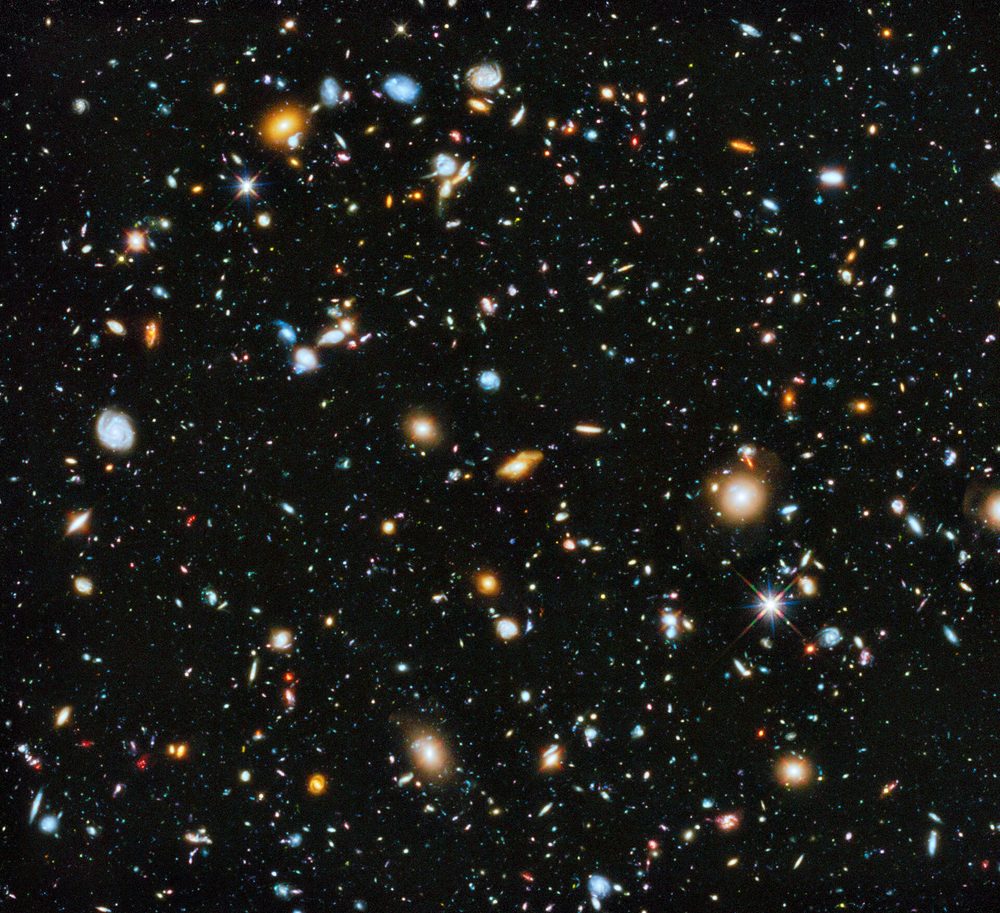
Modern science is the most successful description of physical reality humanity has ever had, and it deserves real thanks. Its branches describe the rules of physical reality with great precision. But the system as a whole has conflicts within it, and it cannot yet say what most of the universe is made of, what gravity is, what life is, or why anyone is conscious at all.
Physics has two best theories, and where they meet they contradict each other.
General relativity explains gravity, planets, and the shape of the universe. Quantum theory explains atoms and light. Experiments have confirmed both again and again. But when both are applied to one situation, such as the inside of a black hole, their equations give infinite or contradictory answers. These are physics' own published equations, shown on this page from the physicists' own sources. It is physicists themselves who say that one of the two theories, or the way they are combined, is wrong about something basic.We can identify about 5% of what the universe contains
This is the baseline for what we know about everything. By the best current measurements, from the European Space Agency's Planck satellite, ordinary matter (every star, planet, gas cloud, and living thing, everything made of atoms) is only about 5% of the universe's contents. About 27% is called dark matter and about 68% dark energy (Planck Collaboration, 2020; NASA).
"Dark" here does not describe a substance. It is a placeholder: a term for an entire chunk of reality we have no understanding of, and together the two placeholders take up about 95% of the universe's contents. Dark matter is the name for extra gravity that we observe but cannot trace to anything we can detect; decades of searches have not found a dark-matter particle. Dark energy is the name for whatever is making the expansion of the universe speed up. In both cases we can measure the effect and have no confirmed account of the cause. So when physicists say their nature is unknown, they mean it literally: about 95% of the contents of the universe are not understood.
Put it in school terms. A score of 90% is roughly an A. Below 50% is an F. Our understanding of what the universe is made of scores about 5%. Five percent is not a nearly finished exam with a few hard questions left. It is the first page of an exam, with the rest still blank.
One more open question. "The universe is expanding" is itself an interpretation of the light from distant galaxies, which is stretched toward red. The usual reading is that space is growing. A minority of physicists have shown the same observations can be described as the things inside the universe, its particles and atoms, changing size instead (Wetterich, 2013; Nature news). HMR finds that reading worth keeping open. It is a question, not a claim.

Values from Planck 2018 (ordinary matter 4.9%, total matter 31.5%, dark energy 68.5%), rounded as NASA rounds them.
Dark matter: we see its gravity pulling on stars and galaxies. We have never seen the thing doing the pulling.
Dark energy: we see the expansion of the universe speeding up. We do not know what is pushing it.
The Planck satellite mapped the oldest light in the universe, released about 380,000 years after the Big Bang. The pattern of tiny hot and cold spots in that light depends on how much ordinary matter, dark matter, and dark energy there is, which is how the proportions are fixed so precisely, even though two of the three are unexplained.
Newton, Einstein and the quantum
With about 5% of the universe identified, the next question is how physics describes that part. Physics is a huge field with hundreds of specialties. For the question of what reality is, three theories carry the rest: Newton's mechanics, Einstein's relativity, and quantum theory. They are the three pillars the building stands on.
Newton (1687) described gravity as a force: every mass pulls on every other mass, instantly, across empty space, inside a fixed space and a single universal clock. It is so accurate that it still flies spacecraft.
Einstein (1915) replaced that picture. In general relativity there is no force pulling across space. Mass and energy bend space and time, and objects follow the bends. Nothing, not even gravity, travels faster than light, and time runs at different rates in different places.
How they conflict. They disagree about what gravity is: an instant pull through a fixed stage, or a bending of the stage itself that spreads at a finite speed. In everyday conditions their numbers agree closely, which is why Newton is still used, but where gravity is strong or speeds are high only Einstein matches what we measure. Newton's picture did not survive; his arithmetic survives as an approximation.
The quantum (1900 to 1930) describes atoms, light, and particles with extraordinary precision, and it pictures reality in yet another way: in discrete packets, as probabilities, on a fixed stage of space and time, the very stage Einstein showed is not fixed.
That last disagreement is the one that has never been resolved. HMR's answer is on the Physics page. Branches of physics describe the rules with great precision, but the system as a whole has conflicts within it. Where general relativity and quantum mechanics must both apply, they cannot both be right as they stand.
This matters beyond physics. It is not aimed at scientists who know the limits of their own field. Many of them say those limits out loud. It is aimed at a common habit: using physics to tell another person "I know better than you" about what is real. Anyone who does that is standing on a platform that can identify about 5% of the universe, and whose best theories conflict where they meet. That is a weak place to stand, however sure it feels. On the deepest questions, no one holds the settled answer.
Each theory is confirmed in its own domain. Many of humanity's best theories tell a story that works for a small part of the picture. For the big picture, humanity has no account of what is real and what is not, and there are few connections between these great theories. In physics:
- Newton's mechanics flies spacecraft, yet treats space and time as a fixed stage.
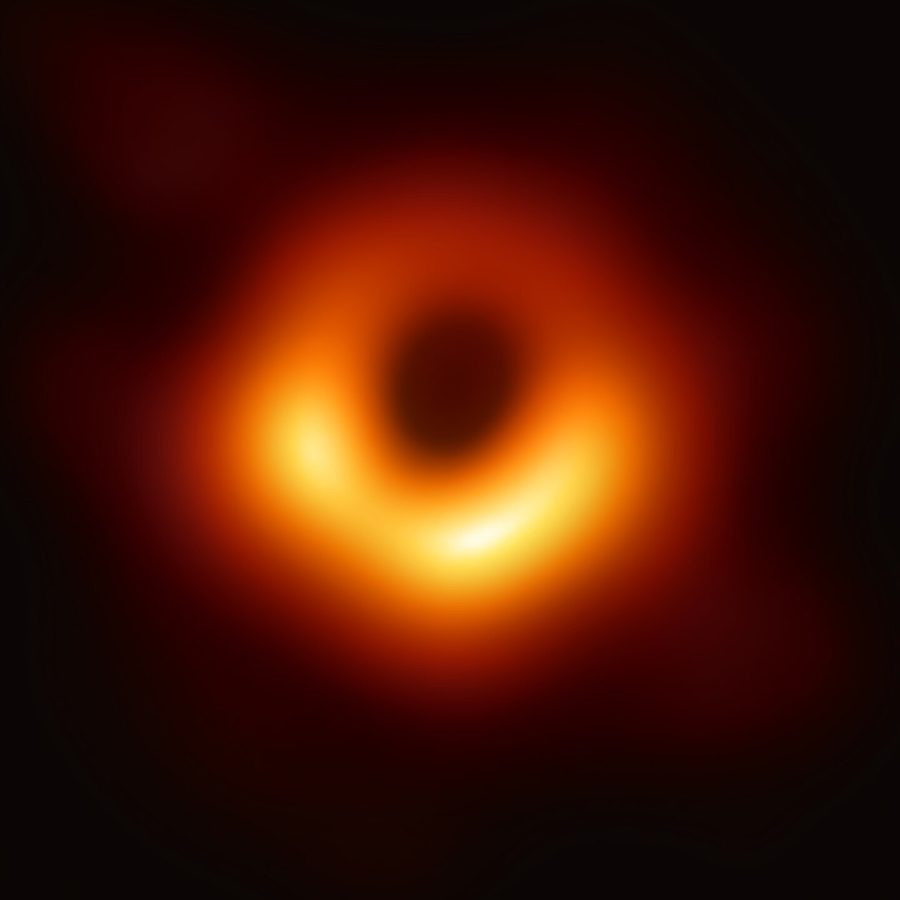
- Einstein's relativity predicts the black hole shadow in M87, yet says space and time bend, and breaks down at the center of a black hole.
- Quantum theory describes atoms and light with extraordinary precision, yet cannot express gravity.
- The standard picture of the cosmos identifies about 5% of what the universe contains.
The same is true outside physics:
- Biology has working definitions of life, but no agreed account of what life is or how the first cell arose.
- Neuroscience lists what a brain does, but cannot say why any of it is felt.
- Medicine has defined disease after disease, but never a fully healthy human body.
- Mathematics cannot prove itself complete (Gödel, 1931).
Where the mathematics of physics conflicts
When two sets of equations, each confirmed by experiment, give contradictory or infinite answers about the same situation, one of two things is true. Either the math is wrong, or the framework that tells us what the math describes is wrong. Math problems cannot be explained away. These are the places where it happens.
Singularities
density → ∞, curvature → ∞
General relativity itself proves that, under very general conditions, collapsing stars and the early universe must reach points where its quantities become infinite (Penrose, 1965; Hawking and Penrose, 1970). Nothing physical can be infinitely dense: an infinity in an equation means the equation has stopped describing the world. So the theory predicts its own failure, at the center of every black hole and at the beginning of time. In other words, it is not a complete model: it fails as a holistic model of reality.
Gravity has not been made quantum
infinitely many unknown constants
The method that turned electromagnetism and the nuclear forces into quantum theories fails for gravity. Calculations produce infinities that cannot be absorbed into a finite set of measured numbers, so at high energies the theory predicts nothing (Goroff and Sagnotti, 1986). Physicists call gravity "non-renormalizable". In plain words: for the most extreme events in the universe, our two best theories together give no answer at all.
The energy of empty space
predicted ÷ measured ≈ 10120
Take everything out of a box and quantum theory says the space left inside still holds energy, because nothing in nature is allowed to be perfectly still. Einstein's theory says that energy must push on the expansion of the universe. So physicists calculated how much there should be, and then measured it. The calculation comes out about 10120 times larger than the measurement, a 1 followed by 120 zeros (Weinberg, 1989).
Two kinds of time
HΨ = 0 (no time variable)
Most of us live as if the world runs on one clock. Physics uses two different ideas of time. In quantum mechanics, time is a single fixed clock ticking in the background. In general relativity there is no such clock: time bends, and runs at different rates in different places. When the two theories are combined directly, time drops out of the central equation altogether (DeWitt, 1967). This is known as the problem of time. In other words, physics has no single account of time that matches the world we live in.
“What we observe is not nature in itself but nature exposed to our method of questioning.”
Werner Heisenberg, physicist, Nobel laureate. Physics and Philosophy (1958). Source
“I regard consciousness as fundamental. I regard matter as derivative from consciousness.”
Max Planck, physicist, founder of quantum theory. Interview in The Observer, 25 January 1931. Source
Black holes and lost information
pure state → mixed state
A rule at the heart of quantum mechanics says information is never destroyed: in principle, you could always work backward from what is to what was. Hawking showed that black holes slowly evaporate, and his calculation implies that everything that fell in is erased for good (Hawking, 1976). Both results come from trusted theory, and they cannot both hold. Fifty years later the "information paradox" is still argued over.
“The more I examine the universe and study the details of its architecture, the more evidence I find that the universe in some sense must have known that we were coming.”
Freeman Dyson, physicist and mathematician. Disturbing the Universe (1979), p. 250.
The math is not the problem. The framework is. Each equation here works superbly in its own domain. What fails is the frame they are read in: physics treats space, time, and matter as the bottom layer of reality. The Holistic Model of Reality (HMR) is an alternative framework in which they are not the bottom layer; they emerge from Universal Intelligence (UI). The conflicts appear exactly where physics pushes back toward an origin (the Big Bang, the center of a black hole, empty space itself), which is what one would expect if the foundations sit one level deeper. HMR → Defining Universal Intelligence → How HMR reads each of these →
Why not simply replace Einstein? Because his equations have passed every test outside these breaking points, so HMR has to agree with them there. At the breaking points the theory has announced its own failure, and there HMR is free to differ. What HMR offers at the center of a black hole is a count: any region holds a finite number of thoughts, so nothing becomes infinite. Why things fall →
“To put the conclusion crudely, the stuff of the world is mind-stuff.”
Arthur Eddington, astrophysicist. The Nature of the Physical World (1928). Source
No one knows what gravity is
The clearest place where the pillars fail to meet is gravity. Imagine a language that can describe everything in the world precisely, except one thing, and that one thing is under your feet every moment of your life. Quantum mechanics is that language. It is the most successful theory ever tested, and it describes every other known force. It cannot express gravity. Gravity is not a corner case: it shapes planets, stars, galaxies, and the flow of time. A holistic model would have to cover everything, and no one has succeeded in quantizing gravity, so quantum mechanics is not a holistic model. A description of reality that cannot express its most basic force is missing something basic, and the missing piece could look very different from materialism.
- It will not join the rest of physics. The other three forces have quantum descriptions. Gravity does not, and every attempt to give it one, from string theory to loop quantum gravity, remains unconfirmed.
- Its mathematics breaks down where it matters most. At the center of a black hole and at the Big Bang, the equations of general relativity return infinite values for density and curvature. An infinity is not a measurement; it is the theory telling us it no longer describes what is happening. Where the math conflicts
- It is absurdly weak. Between two protons, the electric force is about 1036 times stronger than gravity. No one knows why the difference is so enormous.
- It does not add up. Galaxies spin and cluster as if they held far more mass than we can see. Either most of the matter in the universe is invisible, or our account of gravity is wrong at large scales.
In HMR, distance is the first quantity reality ever had (Defining Universal Intelligence, step 3.2). Its first hypothesis about gravity is a trend toward coherence: coherent arrangements draw together, and as matter clusters it takes up, or displaces, distance. HMR holds other readings beside that one and has not chosen between them: gravity as an inward flow of space, which is an exact picture in Einstein's theory; mass carrying momentum through time; and a draw back to source, with the non-physical at the center of mass. Version 2 adds a conjecture that gravity is not the kind of thing that is quantized, and names the experiment that would decide between its two forms (the open question). Each is set against the physics, with what is established and what is only words, on the physics page. Until one of them makes a prediction that can be tested, all are labeled hypotheses.

“Gravity must be caused by an agent acting constantly according to certain laws; but whether this agent be material or immaterial is a question I have left to the consideration of my readers.”
Isaac Newton, letter to Richard Bentley, 25 February 1692/3. In the same letter he called action at a distance through empty space “so great an absurdity” that no competent thinker could accept it. The Newton Project transcription. Newton gave us the law of gravity and deliberately left open what gravity is. Three centuries later, it is still open.
Open questions at the foundations
None of these proves that materialism is wrong. Each is a place where a purely material account of reality has no agreed answer, and where some of the founders of modern physics themselves expected one to be needed.
Connected across any distance
Measure one of two entangled particles and the other's result is correlated with it instantly, however far apart they are. Einstein argued this meant quantum mechanics was incomplete (Einstein, Podolsky, and Rosen, 1935). Bell showed it could be tested (Bell, 1964), and experiments confirmed it (Aspect et al., 1982), including three loophole-free tests in 2015 (Hensen et al.; Giustina et al.; Shalm et al.). The work won the 2022 Nobel Prize in Physics. Reality is not "local" in the everyday sense.
What makes one outcome real?
Measuring sounds simple: hold up a ruler and read it. In quantum mechanics it is the deepest puzzle there is. The equations describe an electron as a spread of possibilities, in many places at once, and they never say that it picks one. Yet whenever anyone looks, it is in one place. The theory does not say what counts as looking, where the spread ends, or why. A century on, physicists still disagree, and the main interpretations give incompatible pictures of reality (Stanford Encyclopedia of Philosophy, "Measurement in Quantum Theory"). Take stock: two theories that conflict, each with a breaking point of its own, and no agreement on what it means to measure anything. This is the science that scores 5%.
Why is there experience at all?
When you see the color red, there is more than nerve cells firing: you have an experience. Neuroscience can map which brain activity goes with which experience. But a map of activity is not an explanation of experience. Nothing in the physics of those cells says why the activity is accompanied by anything felt at all. A rock and a brain are both made of atoms, yet we assume a rock has no experience and we know a human does. Science cannot say what makes that difference. This is the "hard problem" of consciousness (Chalmers, 1995). A material account explains what the brain does, not why there is someone there.
The force that will not fit
No quantum theory of gravity has been confirmed, and the equations of general relativity return infinities at black holes and at the Big Bang. A holistic model would have to cover everything. Gravity has not been quantized, so quantum theory is not a holistic model. Where the math conflicts.
95% of everything, unidentified
Dark matter and dark energy are names for effects, not explanations. Decades of searches have not detected a dark-matter particle, and the cause of dark energy is unknown (Planck Collaboration, 2020). The 5% report card.
Why there is something, and why these laws
Cosmology traces the universe back to the Big Bang, but not what came before it, why it began in such an improbably ordered state, or why its constants fall within the narrow range that allows atoms, stars, and life. These questions have no agreed scientific answer. HMR's account of the transition →
Why nature obeys equations
“The miracle of the appropriateness of the language of mathematics for the formulation of the laws of physics is a wonderful gift which we neither understand nor deserve” (Wigner, 1960). HMR proposes an answer. Why π comes first →
What life is, and how it began
Science has no agreed definition of life, only working ones, and no confirmed account of how living things first arose from non-living chemistry. Without them, it also has no settled answer to what a human being is. Why that matters for the mind →
What a healthy human is
Medicine has defined disease after disease, but never a fully healthy human body to measure them against. Every "normal range" is drawn from people who are themselves imperfect. A new model of health →
What science has given us
Before naming what science has not done: science deserves real thanks for what it has given us. The ideas on this site were thought through, written, and shared on computers that science made possible.
Computers and the internet
Tools to think, write, and share ideas with anyone, anywhere.
Warm and cool homes
Heating, air conditioning, clean water, and light on demand.
Medicine
Vaccines, antibiotics, surgery, and imaging that have saved countless lives.
Technology
Flight, satellites, power grids, and machines that extend what a person can do.
Science is incomplete, and seriously so
Humanity has a habit: in almost every era, it has felt close to having figured everything out. At the end of the nineteenth century, many physicists believed the foundations of their subject were essentially complete. Within a few years came the quantum (1900) and relativity (1905), and the foundations were rebuilt. It is not only physics. Doctors bled patients for two thousand years on a theory of four humours. Astronomers argued in 1920 over whether the Milky Way was the whole universe. Mathematicians set out in the 1920s to prove their subject complete, and in 1931 Gödel proved that it cannot be. Geologists held the continents fixed until the 1960s. We are very likely in the same position today, and further from the full picture than it feels.
Scientists say so themselves. Richard Feynman told his students that “nobody understands quantum mechanics” (The Character of Physical Law, 1965). Steven Weinberg, a Nobel laureate who helped build the Standard Model, wrote in 2017 that it is a bad sign that the physicists most at ease with quantum mechanics cannot agree on what it means (New York Review of Books). David Gross, another Nobel laureate, said of fundamental theory in 2005 that physicists do not know what they are talking about (reported from New Scientist). The physicist Sean Carroll titled a 2019 essay with the claim that even physicists do not understand quantum mechanics (New York Times). NASA's own explainer says of dark energy that more is unknown than is known (NASA).
Put the list together and the picture is plain. Science cannot say what most of the universe is made of. It cannot reconcile its two best theories. It cannot say what gravity is, what came before the Big Bang, why the laws are what they are, why mathematics describes them, what life is, how it began, or why there is experience at all. These are not small gaps at the edge of knowledge. They sit at the foundations, under everything else we think we know.
The Holistic Model of Reality (HMR) proposes a model far from where mainstream thinking is today. It requires changes at the foundations, chiefly two: that physical reality emerges from Universal Intelligence (UI), and that fascia is the body's primary system for health. Those two changes move the model of reality from the mainstream to something new, and they open a green field for many of the answers science is still looking for.
A materialist account of reality is not a finished picture with a few details missing. It is an attempt at a precise description of how physical reality behaves. On small, well-defined problems it succeeds brilliantly. But it has no agreed account of what reality is, and at the largest scales, what the universe is made of and how it began, it misses. Without knowing what the whole is, it is hard to judge how much any single description is worth: a part can be measured to twelve decimal places and still be misread.
There is an irony here. Many people who hold a materialist view are quite sure about the deepest questions: what is sane and what is insane, what is real and what is not. Their own framework cannot say what consciousness is, what a measurement does, or where sanity ends. Materialism is a model of reality that cannot explain what the mind is. It is used all the same, and with great confidence, to decide matters of the mind: which minds are sound, who is medicated, and who is confined. Seen plainly, that is not a rational thing to do. Society does it out of necessity, because some behavior cannot be tolerated and something has to be done, and it manages fairly well. It would manage far better with a model that explains the mind.
This is why humanity needs a holistic model of reality, and needs it now.
Every day, decisions that cannot be undone are made on top of these gaps. Children are raised on a picture of what a person is that no one can defend. People are treated, medicated, and confined by a science that cannot say what a mind is. Bodies break down against a standard of health that was never defined. Nations arm against each other over accounts of reality that none of them can prove. A partial model does not fail in the abstract. It fails in hospitals, in schools, and at borders.
A holistic model keeps everything science has established and supplies what is missing underneath: what reality is, what a person is, and what a body is for. With that in place, the questions that feel unanswerable become answerable: what life is, what death is, what to do with a day, and what right and wrong are. HMR's values →
- What is matter? About 5% identified.
- What is gravity? Its two theories conflict mathematically.
- Where did it all come from? Unknown.
- Why these laws? Unknown.
- Why does math work? Unknown.
- What is life? No agreed definition.
- What is consciousness? Unexplained.
- What is a healthy human? Never defined.
Intelligence first. Space, time, and matter emerge from UI, not the other way round. Defining UI →
Fascia first. The connective web that holds the body together is treated as the main lever of health. A new model of health →
- What is life?
- What is death?
- What should I do with my day?
- What is right, and what is wrong?
- To 1850sMedicine: illness is an imbalance of four humours, treated by bleeding.
- 1890sMany physicists see their subject as nearly complete.
- 1900Planck's quantum: energy comes in packets.
- 1905Einstein's relativity: space and time are not absolute.
- 1920Astronomers debate whether the Milky Way is the whole universe.
- 1929The universe is expanding (Hubble).
- 1931Gödel: mathematics cannot be proved complete from within.
- 1960sGeology accepts that continents move, fifty years after Wegener said so.
- 1998The expansion is speeding up, and dark energy is named (Riess et al.; Perlmutter et al.).
- TodayAbout 95% of the universe unidentified.
What official confidence has done
In every age the majority view has had the full weight of learning behind it. That has never been the same as being right. People who saw further were ridiculed, ruined, or killed, and great harm was done by experts acting on what everyone knew.
- 1553. Michael Servetus described how blood passes through the lungs. He was burned at the stake in Geneva for heresy, and nearly every copy of his book was burned with him (Britannica).
- 1600. Giordano Bruno held that the universe is infinite and that the stars are other suns with worlds of their own. He was burned at the stake in Rome. The charges were chiefly theological (Britannica).
- 1633. Galileo was tried by the Inquisition for holding that the Earth moves around the Sun, made to recant, and confined to his house for life. The Church acknowledged the error in 1992 (Britannica).
- 1847. Ignaz Semmelweis showed that when doctors washed their hands, deaths from childbed fever in his ward fell from about one mother in ten to about one in a hundred. He was ridiculed, lost his post, and died in an asylum in 1865 (Britannica).
- 1906. Ludwig Boltzmann spent his career defending the existence of atoms against leading physicists who denied them. He took his own life in 1906. Atoms were confirmed within three years (Britannica).
- 1912. Alfred Wegener proposed that the continents move. He was dismissed for half a century and died in 1930. Geology accepted it in the 1960s (Britannica).
- 1935. Subrahmanyan Chandrasekhar calculated that heavy stars must collapse without limit, and was publicly ridiculed by the leading astronomer of the day. Nobel Prize, 1983.
- 1982. Dan Shechtman saw a crystal pattern the textbooks said was impossible. He was asked to leave his research group, and a double Nobel laureate called him a quasi-scientist. Nobel Prize, 2011.
- 1982. Barry Marshall and Robin Warren found that a bacterium causes most stomach ulcers, against the settled view that stress did. Dismissed for years, Marshall drank the bacteria to prove it. Nobel Prize, 2005.
- 1995. Katalin Karikó was demoted by her university for persisting with messenger RNA. Her work became the basis of the COVID-19 vaccines. Nobel Prize, 2023.
- About 1450 to 1750. Witch trials. Courts across Europe, advised by learned jurists and clergy, executed an estimated 40,000 to 60,000 people for witchcraft, most of them women (Britannica).
- Antiquity to the 1800s. Bloodletting. Standard medicine for some two thousand years. George Washington's doctors drained an estimated 40% of his blood in his last hours, in 1799. More from the history of medicine →
- 1851. A diagnosis for wanting freedom. An American physician published “drapetomania”, a mental illness said to make enslaved people run away.
- 1907 to the 1970s. Forced sterilization. More than 60,000 Americans were sterilized under state eugenics laws, which the Supreme Court upheld in 1927 (Buck v. Bell).
- 1920s. Radium tonics. Radioactive water was sold as a certified health drink.
- 1932 to 1972. Tuskegee. The United States Public Health Service followed 600 Black men, 399 of them with syphilis, for forty years. The purpose was simply to watch what untreated syphilis does. The men were not asked for consent and were told they were being treated for "bad blood". Penicillin was the standard cure by 1943, and they were never offered it (CDC).
- 1936 to the 1950s. Lobotomy. Tens of thousands of people, about 40,000 in the United States, had the front of their brains cut to treat mental illness. Its inventor shared the Nobel Prize in 1949. The Soviet Union banned it in 1950 as "contrary to the principles of humanity", and by the 1970s many countries and several US states had followed. Today it is described as "a disparaged procedure, a byword for medical barbarism" (Wikipedia). Mental health today →
- 1940s to 1960s. Blaming mothers. Leading psychiatrists taught that autism was caused by cold, unloving mothers. Many mothers were made to feel they were to blame and described deep anguish. A critic wrote in 1964 that the theory brought shame, guilt and marital discord to families. In effect, experts told mothers that their own experience was wrong. In 1969 the psychiatrist who began the theory said he "acquitted the parents" (Embryo Project).
- 1957 to 1961. Thalidomide. Sold as a safe sedative for pregnant women. More than 10,000 children were born with severe limb defects (Britannica).
- Until 1973. Homosexuality as illness. American psychiatry listed it as a mental disorder (Drescher, 2015).
The long argument over where everything is centered
People have argued for thousands of years about where the center of the universe is. Each age was sure of its answer, and each answer was replaced. Galileo is only one chapter of the story.
Early cultures set a world axis, the axis mundi, at their own sacred mountain, tree, or city, on a flat earth. Greek thinkers argued that the earth is a sphere. Ptolemy put the earth at the center with everything circling it, and that was the accepted model for about 1,400 years. Copernicus moved the center to the sun, and some who defended it were burned or tried. Then the sun lost the center too, and then our galaxy did. Modern cosmology says the universe has no center at all.
- Early cultures. Axis mundi. A sacred mountain, tree, or city at the center of a flat earth.
- 4th century BC. A sphere. Aristotle and other Greek thinkers argue the earth is round. About 240 BC, Eratosthenes measures its size.
- 2nd century AD. Ptolemy. The earth at the center, everything circling it. Accepted for about 1,400 years.
- 1543. Copernicus. The sun at the center. Bruno was burned in Rome in 1600, and Galileo was tried in 1633 and held under house arrest until he died in 1642.
- 1918. Shapley. The sun is far from the center of the Milky Way.
- 1920s. Hubble. The Milky Way is one galaxy among many.
- Today. No center. Modern cosmology says the universe has no center.
The lesson is not that science is bad. Every correction on this list was made by science, usually by the people it had first rejected. The lesson is that being official, confident, and in the majority has never been the same as being right. A new model of reality deserves to be judged on whether it holds together and whether its tests pass, and not on how far it stands from the view of the day. These lists are a beginning, and they will grow.
Harm brought into the home
Not all harm came from experts acting on other people. Some people harmed themselves, and their children, with new products and technology that they used every day: in the air, in food and cooking, and in things bought for the house.
Leaded gasoline
More than 170 million Americans alive in 2015, about half the population, were exposed to high lead levels in early childhood. An estimated 824 million IQ points were lost in total (McFarland, Hauer, and Reuben, 2022).
Tobacco
Smoking and secondhand smoke cause more than 480,000 deaths a year in the United States, nearly one in five deaths. Secondhand smoke alone causes more than 40,000 (CDC).
Trans fat
Found in margarine, shortening, and fried and baked goods. It causes more than 278,000 deaths a year worldwide, and has "no known health benefits" (WHO).
PFAS, the "forever chemicals"
Used since the 1940s in stain-resistant fabrics and carpets, water-repellent clothing, grease-resistant products, and some cosmetics. They do not break down, they build up in the body, and they are "found in the blood of people and animals all over the world". Studies suggest some may be linked to harmful health effects, and research continues (CDC and ATSDR).
Each of these arrived as progress and was used with confidence before the harm was counted. A partial picture of reality does not fail in the abstract. It fails in the air, in the kitchen, and in the home.
If you value reason, these gaps are a question for you
Many people who think of themselves as scientific, rational, and guided by values hold a materialist view of reality without ever having examined its foundations.
Being scientific means believing in proportion to the evidence. Being rational means noticing when a view no longer makes sense. Being values-driven means caring what our beliefs do to other people. Taken seriously, those three commitments lead to two honest questions:
Do I keep believing in something that, at its foundations, does not make sense?
What harm do I cause if I stay comfortable in it?
If you stay comfortable in a model of reality that is not true, you never learn who you are. You do not truly know who you are, and you do not truly know what you want.
It reaches other people too. A view of reality decides what we think a person is, what we think is possible for a body, what we treat and what we dismiss, what we teach children, and what we owe each other.
Every value system rests on some picture of what reality is: what a person is, whether life has a purpose, what happens after death, whether anything beyond matter matters. If science cannot say what reality is, then a value system that rests on science alone is resting on an open question.
When science is this incomplete, it is a stretch for anyone to assume they know what follows from it.
In conversation after conversation, people lean on science as if it settled what reality is. But when they look closely at the gaps, few of them actually believe it does. The less someone believes the materialist picture is complete, the more room, and the more reason, they have to want a holistic model of reality.
If the framework is the problem, what replaces it?
The Holistic Model of Reality
One account, from before the Big Bang to the human body, that keeps everything science has measured. HMR →
Where is the science?
The step-by-step account of how a non-physical intelligence became a physical universe. Defining Universal Intelligence →
Science is the most successful description of the physical world ever made. It can identify about 5% of what the universe contains. Its three great theories, from Newton, Einstein, and quantum physics, each work in their own domain and contradict one another where they meet. No one can say what gravity is, what life is, or why anyone is conscious. Physicists say this themselves. The gaps point at the framework the equations are read in, and that is a question for anyone who values reason.